Audio representation
MERT provides learned embeddings for both the full mix and percussion-focused audio, while Demucs separates stems so groove and timbral structure can be analysed from more than one view of each track.
Traktor ML organises a local Techno and Tech House collection by how the tracks actually sound. It extracts learned audio representations and musical metadata, clusters related tracks, orders them for smoother transitions and exports versioned M3U playlists that can be loaded directly into Traktor.
MERT provides learned embeddings for both the full mix and percussion-focused audio, while Demucs separates stems so groove and timbral structure can be analysed from more than one view of each track.
Essentia extracts BPM, beat confidence and musical key so learned similarity can be combined with information that matters directly during a DJ transition.
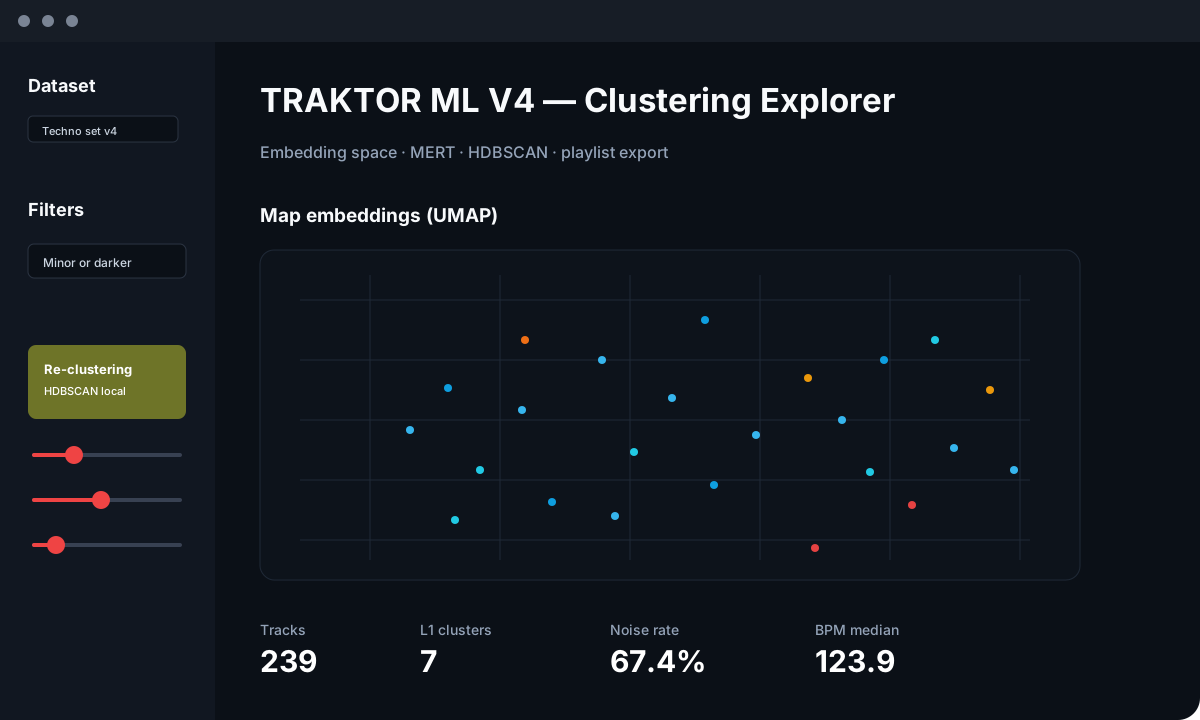
PCA reduces the embedding space before HDBSCAN groups related tracks. UMAP provides a two-dimensional view for inspecting the result rather than treating clustering as a black box.
Tracks inside each group are ordered using embedding distance, BPM distance and Camelot key compatibility, then exported as UTF-8 M3U playlists with paths ready for Traktor.
The current run starts from 243 files and produces a canonical set of 239 tracks after feature extraction. Both MERT representations have shape 239 × 1024, the collection spans 86 to 167 BPM, and the latest export places all 239 processed tracks into 14 playlists.
The Streamlit and Plotly interface shows the UMAP projection, supports cluster filtering, exposes BPM and key metadata and lets playlist versions be reviewed and re-exported after parameter changes. The clustering is a decision aid for DJ workflow, not a replacement for listening and musical judgement.