Edge AI · Sound event recognition · WASPAA 2023

Real-time sound event recognition on a Raspberry Pi

PiSoundSensing demonstrates CNN-based audio tagging on a low-cost standalone embedded device, with both physical and browser-based interaction.

Raspberry Pistandalone edge hardware
PANNspre-trained audio neural network
Real-timesound event recognition
Web UIremote control and visualisation

Project overview

Deployment problem

Strong CNN audio classifiers are typically evaluated on workstation-class hardware. This project examines what happens when a pre-trained audio model is moved onto a resource-constrained embedded platform intended to operate as a standalone sensing device.
Standalone interaction

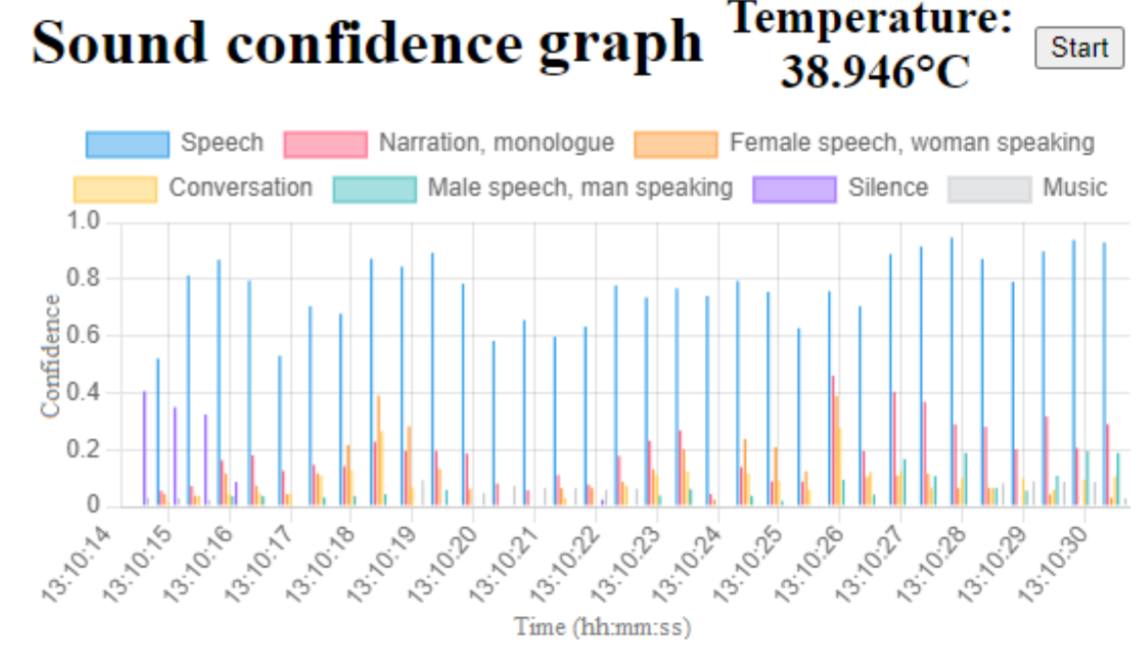
Users can interact locally through a physical button or remotely through a web interface. The browser interface controls the device and visualises detected sound events over time.

Hardware-aware evaluation

The demonstration documents the hardware and software stack and compares observations from deployment on the Raspberry Pi with software-only execution, making the gap between model evaluation and real embedded operation visible.

Project image

Raspberry Pi Sound Event Recognition Demo
The portfolio figure is shown complete rather than cropped. Select it to open the original image.

Evidence and links

Raspberry PiAudioSetReal-time inferenceEmail notifications